The Plan · In my own words · Rev. October 2026
Supercharged Social Security ($$$)
Summary: a 12-step proposal to create true retirement security
Supercharged Social Security would supercharge our economy, slash Social Security costs, enhance benefits, phase out elder poverty & FICA (the Social Security tax taken out of every paycheck), shrink income inequality & create the world’s largest tax cut. This should appeal to both so-called liberals and conservatives. Once the world sees its value, the Supercharged Social Security model could fix Medicare & state pensions to help jump-start the world’s greatest economic boom!
In my own words
This page is my Proposal, revised October 2, 2026: the summary, then all twelve steps, each with an exhibit built from my own sentences, and my guide to terminology. The only changes are a few spelling fixes and short plain-English notes in parentheses. Print it, save it, or send the link to someone who says the program can’t be fixed.
The summary
A 12-step proposal to create true retirement security
Twelve mile markers on “The Road Not Taken.” Each one opens my full step below.
Step 1
Phasing in Supercharged Social Security would help Social Security survive and thrive by fixing its worst problems, and preserve its best “social-insurance” features, such as the COLA (yearly cost-of-living raises) & defined benefits (a promised monthly check for life).
Step 2
Supercharged Social Security would invest in a total stock market index (one fund that owns a slice of every U.S. company). But NOT via privatization (individual accounts YOU would have to manage). Reinvesting dividends and holding ultra-long term would make index investment virtually riskless.
Step 3
Supercharged Social Security would supercharge our economy! Begun in 1935, benefits could have pumped $39 trillion into our economy through 2025 (net of $1 tr. in costs). Plus more than $900 Tr. more from 2026 thru the 2130s – at NO additional cost. In sad contrast, through 2025, our legacy (today’s) retirement system cost our nation $3.6 tr. more than its benefits.
Step 4
Supercharged Social Security would expand Social Security eligibility to ALL newborn Americans & most of today’s younger workers. Older & now-retired workers would remain in the legacy system. When fully phased in, ALL Americans would become eligible for strong retirement benefits.
Step 5
Supercharged Social Security would discontinue costly “procrastination funding” (today’s workers’ taxes pay today’s retirees; nothing is saved up to grow) and no-growth, government-bond-only investment (by law the fund may hold only Treasury IOUs, which don’t grow). At or before birth, parents or family of newborn Americans would fully-fund above-poverty-level retirement benefits. The one-time cost would be dirt cheap!
Step 6
A Minimum Target Benefit (MTB) and an annual Cost Of Living Adjustment (COLA) would phase out poverty for virtually ALL senior Americans within two to three generations. Voluntary contributions could increase the MTB substantially. Supercharged Social Security would allow retirement before age 62 for individuals with substantially over-funded MTBs.
Step 7
Supercharged Social Security would be far more cost effective than any other government program. Some parents might need small at-birth government loans to fund benefits. But for every dollar lent, the government would receive far more money than it gets from any other loan program.
Step 8
Unlike the legacy system Trust Fund, the Supercharged Social Security Trust Fund would be a true lockbox to be used only for providing benefits. Borrowing from it would be forbidden by law.
Step 9
Supercharged Social Security could provide death benefits to named beneficiaries (the people you choose to receive the money) from a more tax-friendly retirement plan to further reduce the already low Supercharged Social Security cost, and accelerate legacy-benefit funding.
Step 10
For those born too early for at-birth investment, voluntary contributions & payroll taxes would fund benefits. Employee/employer payroll deductions could stop once MTBs are fully funded, often decades before workers retire. Supercharged Social Security would remove the “earnings cap” (the yearly wage limit above which FICA stops). But high-earning workers and their employers would benefit substantially by avoiding the hundreds of thousands of dollars in unproductive, career-long FICA imposed by the legacy system.
Step 11
During the transition to full Supercharged Social Security implementation, payroll deductions would still be a major source of legacy retirement benefits. Supercharged Social Security would also include a variety of other provisions to help fully fund the legacy system’s unfunded obligations (benefits promised but not yet paid for) as soon as possible.
Step 12
If your representatives put YOUR interests first, they’ll amend Social Security with Supercharged Social Security. Weak OASI (Old-Age and Survivors Insurance, the retirement part of Social Security) retirement benefits created a need for plans like IRAs (private retirement savings plans). Politicians got political donations to create them. If they fear strong Supercharged Social Security benefits from Social Security market investment would shrink contributions, they shouldn’t. Supercharged Social Security FICA phase-out would create tens of trillions of dollars in new disposable income (money left to spend after taxes), enabling many Americans to better afford new retirement plan investment. By making all of us better off, including employers, politicians & the retirement industry, Supercharged Social Security could produce an economic bonanza.

Step 1 of 12
Phasing in Supercharged Social Security would enhance Social Security’s best features & fix its worst problems.
Supercharged Social Security would be phased in. It would keep Social Security’s best features:
- a “social insurance” retirement safety net.
- monthly defined-benefit pension payments & Cost Of Living Adjustments (COLAs).
Supercharged Social Security would redesign & strengthen Social Security’s weak retirement provisions. It would:
- slash costs by funding benefits as early as possible, at ultra-low cost.
- reduce working-age poverty – and income inequality – by phasing out FICA.
- phase out elder poverty with above-poverty benefits and pre-retirement FICA savings.
- raise minimum and maximum retirement benefits substantially.
- put ALL newborn Americans – not just workers – on track for solid retirement benefits.
Social Security’s founders (the founders) were perhaps well-intentioned. But our national retirement system’s design gave us huge, growing problems.
Exhibit 1 · The worst problems
Perhaps Social Security’s WORST flaw is its “inter-generational compact.”
- Younger generations pay for retirement & survivors’ benefits of their parents’ and grandparents’ generations via pay-as-you-go (procrastination) funding.
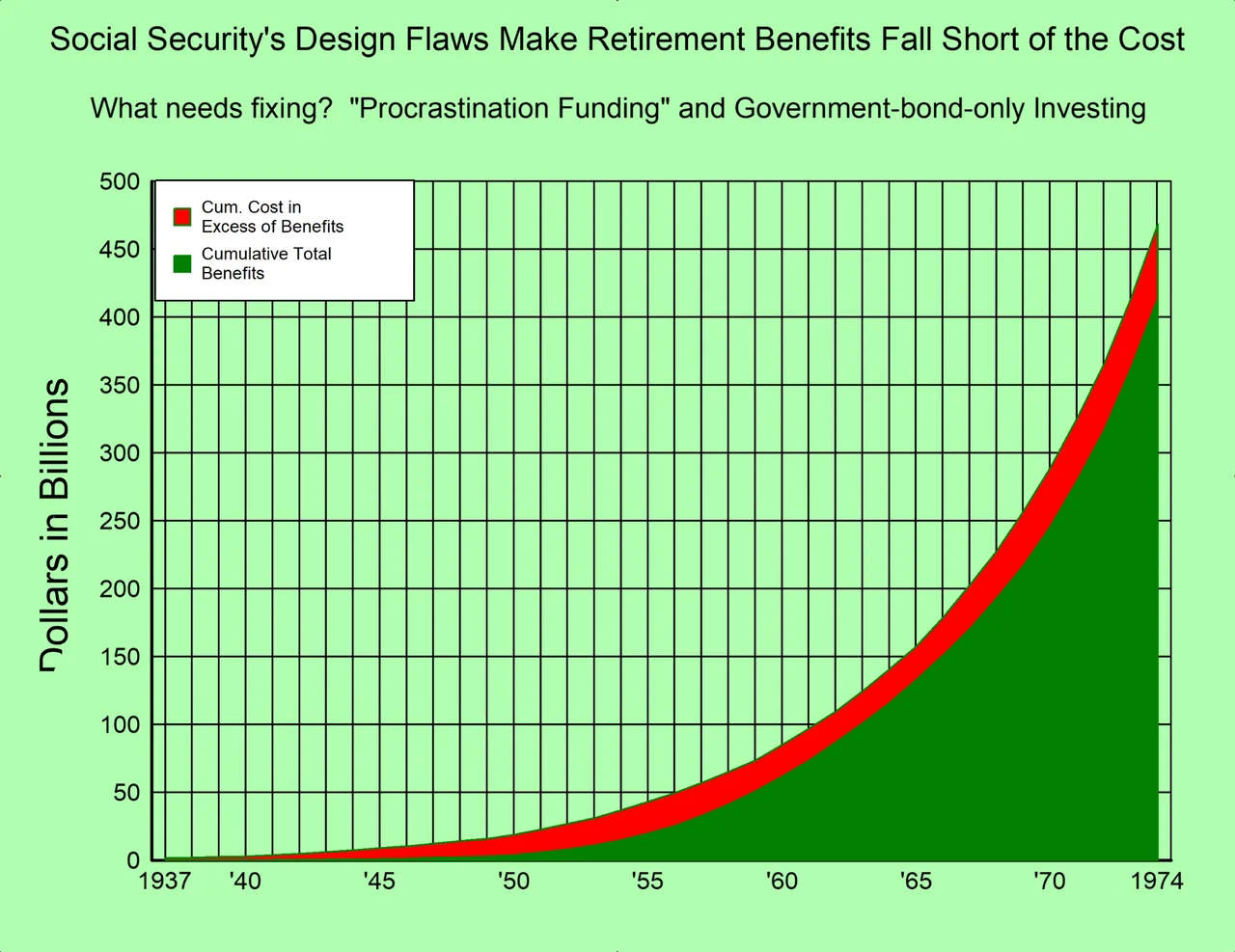
- more than$25 TRILLIONAs a result, OASI’s cumulative cost for 1935–2025 was more than $25 TRILLION!
- about$3.6 TrillionYet benefits fell short of that cost by about $3.6 Trillion!
Weak benefits & high costs hurt all age groups and employers.
- Weak (or no) benefits undercut retirees’ disposable income & stunt business revenues.
- 18.5 mil.In 2025, Census Bureau showed 18.5 mil. people 64 or younger in poverty (10.3%).
- nearly34.5 millionHigh costs left nearly 34.5 million of our population in poverty (9.3%).
- 28,062%Since Social Security began, average OASI FICA thru 2025 grew 28,062%, raising businesses’ expenses and foisting a huge burden on both employees & employers.
- 12.6 timesAs the worker-to-retiree ratio (how many workers pay in for each retiree) shrunk, FICA grew 12.6 times as fast as inflation. The worker-to-retiree ratio problem would disappear with Supercharged Social Security at-birth funding.
- a gallon, by 2026$58–$84If gas costs had been tied to the cost of FICA in 1937, by 2026, the average worker would have paid $58 a gallon based on OASI costs only, $68 including Disability costs, or $84 for all Social Security (including Medicare HI costs).My gas-vs-FICA chart is on Two Roads.
Fixing Social Security just requires common sense and the discrediting of old myths:
- Smart American parents know their newborn children will need substantial retirement income in six-plus decades, so why procrastinate if funding could be dirt-cheap?
- The smartest way to fund benefits is a safe, growing investment at or before birth.
- $2.5 tr.OASI’s so-called “government bonds” provide no growth for retirement assets, but they cost YOU and other taxpayers (including retirees) $2.5 tr. through 2025!
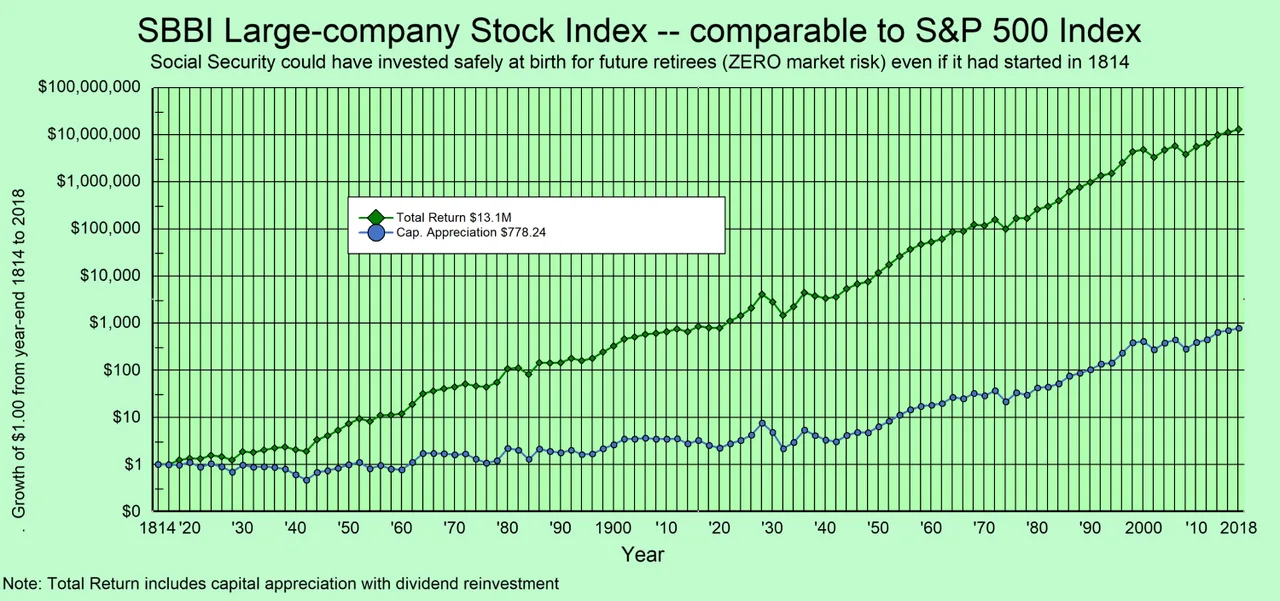
What if OASI began investing in a stock-market index instead of bonds in 1937?
- an estimated$106 tr.Answer: OASI’s Trust Fund could have grown to an estimated $106 tr. by 2025! That was net of bond redemptions (bonds cashed in) when FICA didn’t cover benefits & expenses.
- instead, just$2.4 tr.Instead, OASI’s no-growth Trust Fund shrunk to just $2.4 tr. by 2025.
Step 2 of 12
Virtually riskless investment would provide substantial benefits – dirt cheap!
Exhibit 2 · The investment policy
Investment policy would be simple.
- Pool incoming money
- invest as early as possible in a Total Stock Market Index (TMI)
- reinvest dividends
- hold ultra-long term
- pay benefits out of accumulated assets
Holding ultra-long term would make Supercharged Social Security virtually riskless.
But Supercharged Social Security WOULD NOT PRIVATIZE Social Security. That would be a recipe for disaster.
For all Americans born after Supercharged Social Security startup (startup), funding benefits and investing “early as possible” would be at-or-before birth. The TMI would own a part interest in virtually all U.S. common stocks plus similar securities, such as Real Estate Investment Trusts (companies that own income-producing property).
For newborns, early investment would provide a huge advantage vs. private-sector pensions. Typically a two-to-three decade head start on investment. For workers born before startup, Supercharged Social Security would invest payroll deductions. When fully phased in, early-as-possible investment would provide substantial retirement income for virtually all Americans. Strong Supercharged Social Security benefits plus other retirement income would provide greater retirement security.
Limited private-sector services would be permitted, e.g., securities custody (safekeeping the investments). Like the Federal Reserve system, Supercharged Social Security-enabled Social Security must be politically independent.
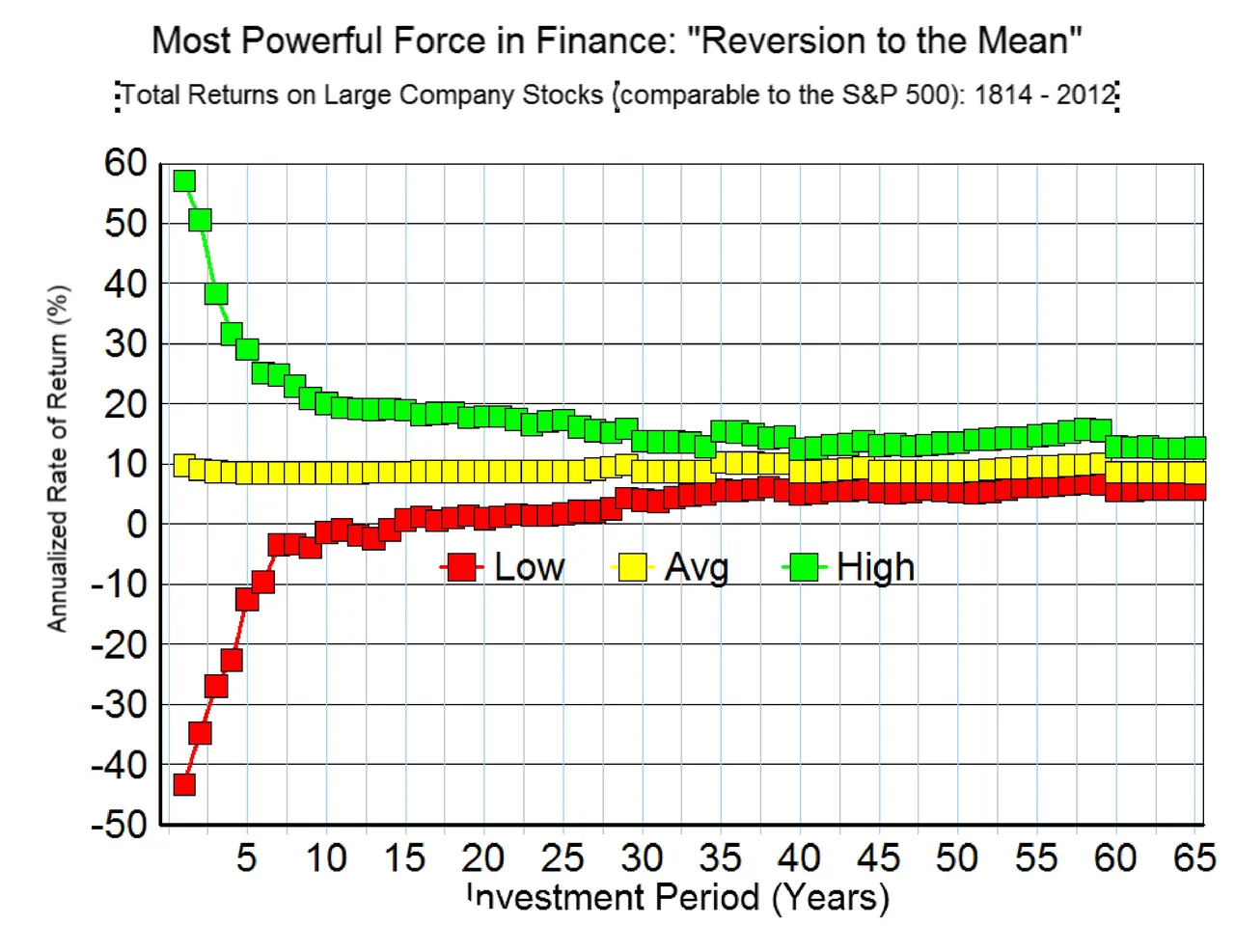
Supercharged Social Security would be long-term focused. Over the past 200+ years, every six-decade period has had significant rate-of-return fluctuations. But periods of unusually high or low rates of return have always been followed by an inevitable “reversion to the mean” (after a big swing, the market comes back toward its long-run average). If the Supercharged Social Security Trust Fund became over- or under-funded substantially, the at-birth tax or payroll withholding rate could be changed.
Exhibit 3 · The emergency fund
When stocks have run up
Supercharged Social Security OASI could “sell high” and then buy marketable Treasury securities (government bonds that can be sold for cash) when rising stock markets have over-funded Supercharged Social Security-OASI very substantially.
In a bear market
If the Trust Fund later became temporarily underfunded during a bear market (a big stock-market drop), Supercharged Social Security could increase TMI holdings by selling those Treasury securities to “buy low.”
Supercharged Social Security would discontinue investing in so-called “government-bonds,” excluding potential Supercharged Social Security emergency fund purchases. Legacy Social Security does not actually invest in “marketable” bonds, i.e., those that could be sold to pay benefits. Combined with pay-as-you-go funding, this policy contributed greatly to Social Security’s dismal past performance, and creates unacknowledged risk. For example, if the U.S. Treasury (Treasury) lacked sufficient receipts, or ability to borrow due to a government shutdown, legacy benefits could be jeopardized.
The legacy OASI “trust fund” is merely an accounting mechanism, not a true trust fund. Treasury receives OASI revenues, pays retirement benefits, combines remaining funds with other receipts, and issues accounting credits similar to IOUs for any amount not used to pay benefits.
Step 3 of 12
Slashing tax costs and strengthening benefits would supercharge our nation’s economy.
The U.S. economy and stock market are strongly linked. Had the founders recognized that fact, they could have designed a much better retirement system. Table 1 shows that the cost and benefit advantages of Supercharged Social Security vs. legacy Social Security were huge! So huge, fixing Social Security now with Supercharged Social Security could supercharge our economy’s long-term growth.
Table 1 – Legacy Social Security vs. Supercharged Social Security a ($ in Trillions)
| Line item | Legacy System | Supercharged Social Security System | Supercharged Social Security advantage |
|---|---|---|---|
| Estimated cost: 1935–2025 | $26.5 | $1.0 | $26.5 less |
| Estimated benefits 1935–2025 | 23.1 | 39.0 | $15.9 more |
| Potential benefits beginning 2026 | 2.3 (thru 2027) | 928.8 (thru 2130s) | $926.5 more |
| Total benefits beginning 1935 | 25.4 (thru 2027) | 967.8 (thru 2130s) | $942.4 more |
| Opportunity cost = $968 tr. b | (967.8 − 1.0) − (25.4 − 26.5) | ||
a – Numbers may not add to total due to rounding. b – 1935 thru last benefit payment (~ Aug 2027 if no new money came in after 2025, ~ the 2130s for Supercharged Social Security) | |||
My road charts, with the same comparison drawn mile by mile, are on Two Roads.
Cumulatively for 1935–2025, our legacy retirement system took in $26.5 tr. Benefits paid out fell $3.5 Trillion short of their cost. With no new money in, the trust fund could cash in its trust-fund IOUs and continue paying benefits until early 2027. At that time, the cumulative benefits would fall short of cumulative cost. However, with Supercharged Social Security, estimated benefits just through 2025 could have exceeded cost by $37 tr.! By ignoring the Supercharged Social Security design, the founders created an estimated $968 Trillion opportunity cost (what we lost by not taking the better road) from inception through the 2130s.
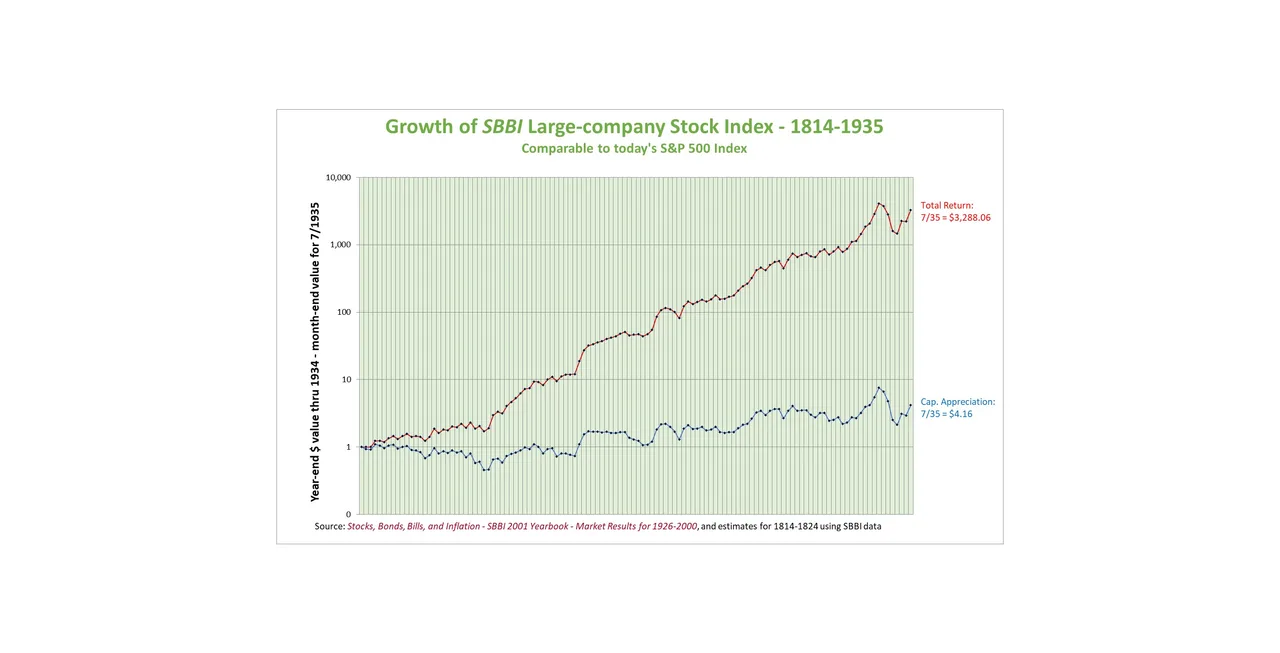
The Supercharged Social Security design was based partly on annual stock market data for 1814–1934. It’s been published annually since 2001 in Stocks, Bonds, Bills, and Inflation (the SBBI yearbook, a standard record of market returns), from sources readily available to the founders before 1935. It revealed how Social Security could have invested retirement money with zero market risk. However, since 2001, failure of elected representatives to use a model like Supercharged Social Security to strengthen Social Security (and Medicare) is inexcusable.
| Series | 1937–2025 change |
|---|---|
| Gas: average annual price | 1,612% |
| OASI FICA: average worker’s cost | 28,062% |
| Supercharged Social Security TMI index | 881,184% |
Table 2 shows high-cost FICA, not gas, is our enemy. Our friend? The high-growth Supercharged Social Security TMI. With low-cost, high-benefit Supercharged Social Security, our post-1935 economy would have grown faster, helping ALL Americans and their employers, not just wealthy Americans. Working Americans and employers would have been totally free from paying FICA by the late 1990s. ALL Americans would have higher disposable incomes at retirement.
Step 4 of 12
By expanding Social Security eligibility, Supercharged Social Security eventually would include ALL Americans.
Exhibit 4 · Who is in which group
Stakeholders (the people with a stake in Social Security) are sorted on the day Supercharged Social Security starts.
Group 1
Born on or after startup, or fully funded
Supercharged Social Security benefitsALL Americans born on or after startup, and/or those who fully fund future benefits with sufficient voluntary contributions. Employers would no longer need to withhold and pay involuntary retirement taxes, but employees could opt for limited voluntary withholding with no employer-match requirement to make their benefits even greater.
Group 2
Born before startup, younger than the cutoff age
legacy credits, then Supercharged Social SecurityAmerican workers born before startup but younger than an “Supercharged Social Security Retirement-Credit Cutoff Age” (RCCA), to be established before startup, and certain foreign-born workers. If, for example, Supercharged Social Security had begun in 2025 and the Group 2 RCCA was age 50 (i.e., 12 years from age 62 at startup), life expectancy for the oldest Group 2 stakeholder would have been about 32 years (i.e., investment horizon before retirement). Retirement credits (the work record Social Security counts toward a benefit) accumulated 12 or more years before minimum retirement age would be applied toward legacy benefits. Credits accumulated thereafter would be applied toward Supercharged Social Security benefits. Group 2 stakeholders could expect better retirement benefits than if all FICA were applied to legacy benefits.
Group 3
At or older than the cutoff age, with substantial income
may opt in to Supercharged Social SecurityIndividuals at, or older than, the RCCA at startup who earn substantial annual income. If that income were sufficient to fully fund Supercharged Social Security retirement benefits before the minimum retirement age, they could opt to participate in Supercharged Social Security.
Group 4
At or older than the cutoff age
legacy benefitsThose at or older than the RCCA at startup, excluding Group 3 high income individuals. Included would be those at the minimum retirement age or older who have not yet retired, and all who have filed for, or who are collecting, legacy retirement benefits. Individuals in this group would receive, or continue to receive, legacy retirement benefits after startup.
ALL Group 1 stakeholders would become eligible for substantial benefits. At full phase-in of Supercharged Social Security, in two to three generations from startup, virtually all American-born Social Security stakeholders would have been born into Group 1. Their benefits would have been fully funded at or before birth, relieving workers of burdensome, career-long legacy retirement payroll taxes.
Supercharged Social Security could also make provisions to provide some benefits to those Americans the legacy system excludes from benefit eligibility.
Mandatory withholding for foreign-born employees would continue until their retirement benefits were fully funded.
Step 5 of 12
Supercharged Social Security would slash the cost of retirement and yet guarantee above-poverty benefits to all.
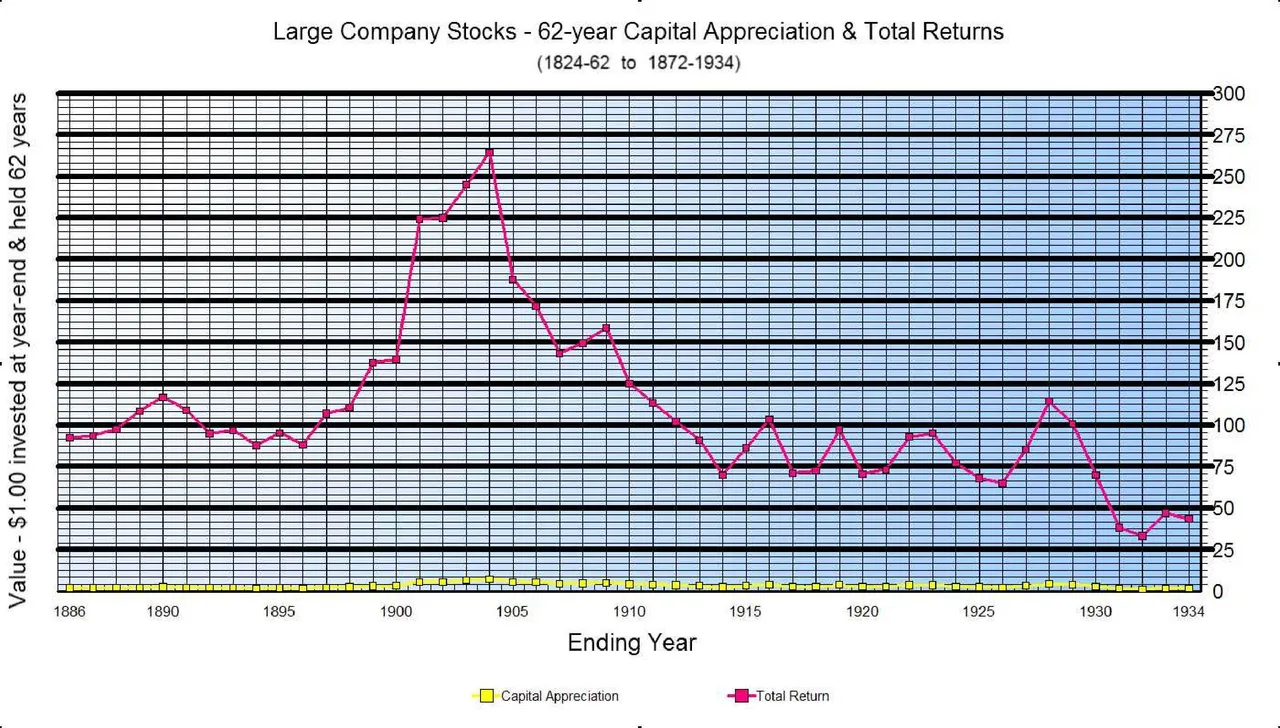
Legacy system flaws stem from its design, based on an 1881 German idea used to create the world’s first old-age social insurance program. By ignoring Ben Franklin’s “time is money” principle, the legacy system “inter-generational compact” made children pay for their elder generations’ benefits. No-growth investment and procrastination funding stuck millions of retirees with below-poverty-level benefits. From inception through 2025, each dollar of OASI cost produced benefits of just 87¢ (or less if we included hidden costs). To add insult to injury, OASI’s design exacerbated elder poverty by totally excluding some seniors from benefit eligibility. Failure to end elder poverty deprived millions of retirees from “certain unalienable rights,” including “life, liberty and the pursuit of happiness.”
The Supercharged Social Security funding model’s design would eliminate procrastination funding.
Exhibit 5 · Five ways to fund a newborn
>99%
Much cheaper, early-as-possible funding from parents would slash retirement costs for newborn Group 1 stakeholders by more than 99%. Low costs would make greater benefits much more affordable.
- an at-birth tax on parents or guardians, paid when income taxes are filed;
- a small, one-time, at-or-before birth “KerreyLoan” (a tiny loan at birth that pays for your benefit, repaid later from paychecks) to parents or other responsible parties from an Supercharged Social Security-OASI Trust Fund (Supercharged Social Security-OASI);
- voluntary payments (contributions) via gifts from parents, relatives, or friends;
- limited gifts similar to (c), using voluntary asset transfers from parents or others from existing retirement vehicles such as IRAs or 401(k)s;
- contributions from charitable foundations or similar entities.
“The best time to plant a tree was 20 years ago. The second best time is now.”
“The best time to put money into Social Security for benefits payable today was 62 years ago, or earlier, if it was wisely invested and allowed to grow. The second best time is now. The worst time is tomorrow, to pay benefits that are due the next day. And that’s what Social Security has done since it began. Social Security needs to be amended.”
For Group 2 stakeholders (young to middle-aged people born before startup), an “Supercharged Social Security Pension Payroll Tax” (Supercharged Social Security PPT) would fund benefits. For many retirees, each dollar of Supercharged Social Security lifetime benefits could cost less than a penny. All contributions would vest immediately (the money would be yours right away). Upon full-funding of an individual’s benefits, the employer would be exempt from Supercharged Social Security PPT payments. Thereafter, workers would be required to lend Supercharged Social Security PPT to SSA (the Social Security Administration) to help fund legacy OASI retirees’ benefits. Once legacy system-wide benefits were fully funded, Supercharged Social Security PPT lenders could opt to make supplementary payroll contributions to increase their own Supercharged Social Security retirement benefits. At retirement, SSA would repay PPT lenders via an increase to their regular Supercharged Social Security retirement benefits.
Voluntary contributions from Group 1 or 2 stakeholders could raise retirement benefits of those Supercharged Social Security participants substantially. SSA would set maximum contribution limits at startup, and could adjust them subsequently. Most citizens and certain non-citizens (permanent residents, green cards, etc.), could make voluntary contributions. SSA would establish criteria for non-citizen participation, and for a “Voluntary-contribution Cutoff Age” (VCCA).
Step 6 of 12
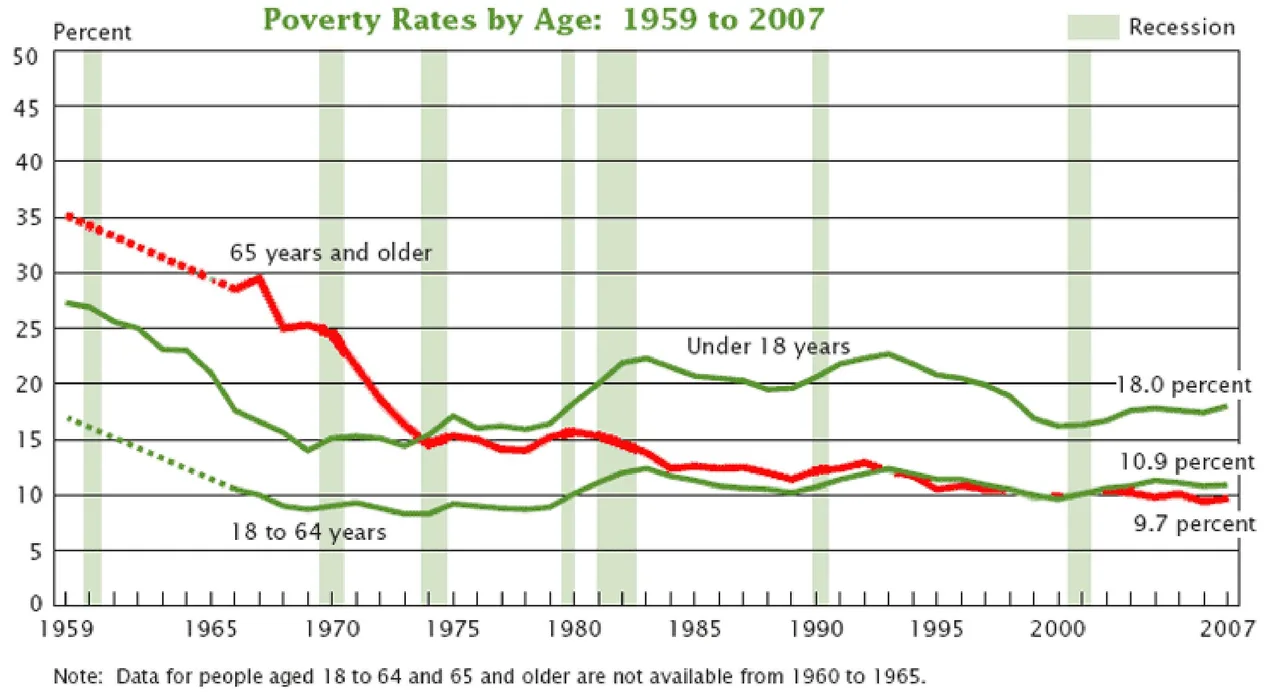
Supercharged Social Security could achieve what Social Security never attempted – an end to elder poverty.
Supercharged Social Security could phase out elder poverty.
Exhibit 6 · The benefit floor
Phasing in the MTB for ALL Americans could phase out elder poverty within two-to-three generations.
For all newborns (Group 1 stakeholders), Supercharged Social Security would fully-fund MTB at or before birth. For Group 2, 3 and 4 stakeholders, the Supercharged Social Security PPT would be required, but only until individuals’ MTBs were fully funded.
Before startup, actuaries (the experts who calculate what pensions must cost) would establish MTB amounts at some multiple of poverty-level income. For example, two times a benchmark such as the Census Bureau poverty threshold (the official poverty line), with adjustment for expected inflation between birth and retirement. Another possible benchmark: poverty guidelines issued in the Federal Register by the Department of Health and Human Services (HHS). Considerable study would be advised before actuaries set MTBs, but they would have six decades or so to make adjustments for newborns, if needed. Actuaries would then calculate at-birth and payroll-pension contribution amounts needed to provide future MTBs plus annual COLAs over retirees’ expected lifetimes.
Unlike the legacy system, workers born too early for at-birth investment would fund their own retirement benefits, not those of older generations. Supercharged Social Security-PPT withholdings would first be applied to a worker’s own retirement benefits, and then to repayment of KerreyLoans or other loans. Finally, Social Security would borrow (not confiscate) Supercharged Social Security-PPT to fund legacy retiree benefits. Supercharged Social Security OASI would be legally obligated to pay additional Supercharged Social Security retirement benefits from the principal and accrued interest of any borrowed Supercharged Social Security-PPT.
As with legacy benefits, MTB would increase for each month retirement is deferred. SSA should encourage individuals to use available options to increase their benefits above MTB level well before retirement. That would help all Americans, but especially those who retire single in high-cost-of-living areas where the “real” poverty rate is above the official level.
Voluntary Supercharged Social Security pension contributions, e.g., those made early in life or before birth, could make starting retirement benefits higher than MTB. Benefits lower than MTB would become increasingly rare, e.g., for an immigrant who joins the U.S. workforce later in life. Or for a worker with payroll-deduction-funded benefits who becomes unable to work before MTB is fully funded, legacy Disability benefits might be needed. But once Supercharged Social Security is fully phased in, benefits for all newborn Americans would be fully funded at birth.
Those younger than age 62 who had over-funded their benefits substantially could retire early. The earlier the requested retirement date, the greater would be the required over-funding percentage. As with the legacy system, delaying retirement would increase the annual benefit amount. MTB would increase (or decrease) for each month after (or before) age 62.
Step 7 of 12
Supercharged Social Security would be far more cost effective than legacy Social Security and other programs.
SSA would make small, default-proof loans (loans that can’t go unpaid) to parent(s) who are unable to fully fund their newborn’s future benefits. Repayment of loans would be required from all recipients who receive earned income before retirement. Some other responsible party (for example, a grandparent) could voluntarily assume responsibility for loan repayments, which would be made to the Supercharged Social Security Trust Fund via payroll deductions or voluntary payments.
Such loans would be quite cheap relative to future benefits, and relatively quick and easy for most borrowers to repay. Repayment of KerreyLoans or other Supercharged Social Security loans generally would be via payroll deductions or voluntary contributions.
Before startup, SSA should create financial incentives to encourage loan recipients to repay loans quickly. Repayments received earlier than scheduled could be recycled into more loans to parents. That could reduce or eliminate government borrowing needed to make more loans.
At-birth funding loans of parents who die prematurely would have to be repaid by the beneficiary via payroll deductions. If that beneficiary has insufficient career income to repay the loan, it would be repaid from accumulated Supercharged Social Security investment assets at retirement. That might result in retirement income that falls short of MTB, but it would still be expected to be well above poverty level.
Parents or beneficiaries would not be required to repay funding from gifts.
Exhibit 7 · What a KerreyLoan buys · a certificate
Supercharged Social Security at-birth costs would be quite low.
So repayments on low-cost loans would place little burden on most people.
- For example, assuming an at-birth cost in 1935 of$250
- and adjusted for inflation since, the one-time at-birth cost would have been, by 2025,Compared with the cost of the cheapest new car, that would represent a small loan.less than $6,250
- For Americans born 1935–63, the initial age-62 Supercharged Social Security benefit would have beenof poverty level200%
Had Supercharged Social Security begun in 1935, it could have produced huge retirement benefits from each dollar loaned at birth.
- We estimate that, on average, one at-birth dollar invested between 1935 and 1963 could have grown by age 62 tomore than $600
- and produce, in lifetime retirement benefits,well over $1,700
- Worst case, we expect $1.00 invested for 1946 newborns would produce lifetime benefits of about$1,197
Loans from charitable foundations or similar institutions would be repaid via the Supercharged Social Security OASI Trust Fund to the institution, or at the option of the institution, be retained by Supercharged Social Security OASI to fund benefits for future newborns.
Step 8 of 12
Supercharged Social Security would provide a true lockbox to be used only for providing retirement benefits.
Exhibit 8 · The lockbox
The true lockbox · Supercharged Social Security-OASI
- Borrowing from it would be forbidden.
- Disbursements (money paid out) would be limited to regular benefit payments, Supercharged Social Security retirement investments, “bonus benefit distributions,” or administrative costs.
- An additional alternative, when Supercharged Social Security-OASI is over-funded, might be to use excess funds to fully-fund a portion of legacy benefits.
The leaky lock box · legacy OASI
- From inception through 2025, when OASI receipts exceeded immediate obligations, the U.S. Treasury “borrowed” any surplus cash not needed immediately to pay benefits.
- In exchange, OASI’s Trust Fund received what are, in effect, unmarketable IOUs (IOUs that can’t be sold for cash).
- Treasury could then use borrowed funds to finance government initiatives unrelated to retirement benefits. In effect, it could bypass the federal budget process or make it less transparent.
- In the process, OASI accumulated about $2.3 tr. in “IOUs” that provided no opportunity for growth.
If the Supercharged Social Security OASI Trust Fund were over-funded for an extended period, after the Supercharged Social Security emergency fund has reached its maximum allowable size, SSA could make bonus benefit distributions to Supercharged Social Security participants.
For example, if the Supercharged Social Security Trust Fund were over-funded by 30% or more at month end, over a period of two years. SSA would establish the actual percentage and minimum period of over-funding prior to Supercharged Social Security implementation.
The Trust Fund’s grand total bonus benefit distribution would be limited to an amount that would leave Supercharged Social Security-OASI still over-funded by, say, half of the original over-funded percentage.
For non-retired individual participants with MTBs not yet fully funded, or for those with outstanding Kerrey loans, bonus benefit distributions would be applied first to repayment of loan balances and then toward fully funding their MTBs. The remaining amount receivable could then be applied toward increasing future benefit amounts beyond the MTB. Alternatively, recipients might receive bonus benefit distributions partially or fully in cash, or as credits toward income-tax obligations.
As SSA gains experience with Supercharged Social Security, and as the percentage of participants fully funded at or before birth increases over time, the minimum over-funding percentages before and after distributions might be adjusted upward, or downward, as appropriate.
Step 9 of 12
Death benefits from Supercharged Social Security would further reduce the already low cost of benefit funding.
With legacy Social Security, the money for retirement benefits comes mostly from workers’ and employers’ FICA, and from government-bond interest. In some cases, FICA could total hundreds of thousands of dollars over a career. With premature death, a lifetime of previously-paid-out legacy FICA would provide little or no significant benefit to others. In effect, the U.S. Treasury confiscates FICA credited toward, but not set aside for, a worker’s retirement benefits.
Exhibit 9 · Where a death benefit goes
If a participant were to die at or after reaching life expectancy, no death benefits would be payable.
- If a death-beneficiary’s Supercharged Social Security MTB had not been fully funded upon death, the death benefit would first be used to pay off any loans outstanding. Then, death benefits could be payable to named beneficiaries.
- For any beneficiary spouse or “partner,” whether or not they have reached minimum retirement age, any death benefit would be applied first toward fully funding the beneficiary’s MTB.
- Then, any additional available death benefits would be applied toward increasing beneficiary’s benefits, up to the maximum allowable Supercharged Social Security benefit.
Younger named beneficiaries
For younger named beneficiaries, such as a decedent’s (the person who died) children or grandchildren, death benefits would be applied first toward repaying any Supercharged Social Security loans, and second, toward providing or increasing any amounts previously made to fully fund MTB. Any remaining credit toward retirement benefits would be transferred to named beneficiaries’ Supercharged Social Security accounts. That might provide greater-than-MTB benefits, but limited by the maximum allowable Supercharged Social Security benefit.
If no one is named
Supercharged Social Security OASI would, in effect, be the default beneficiary if a decedent had opted out of selecting beneficiaries, if all named beneficiaries die first, or for any death benefits that exceed the maximum allowable death benefit. In such cases, assets that had been accumulated for the decedent could be put into two trust funds.
One
One would be for paying retirement benefits to individuals that had been ineligible for legacy benefits.
The other
The other would be to supplement benefits for legacy beneficiaries that would otherwise retire with less-than-poverty-level benefits.
Step 10 of 12
Supercharged Social Security would be much more tax-friendly than legacy Social Security.
Exhibit 10 · Double, triple, quadruple
Taxation of benefits could be similar to other qualified or non-qualified retirement vehicles (retirement plans, with or without special tax breaks).
Taxation of Supercharged Social Security payroll deductions would be based on two simple principles:
- workers work hard for their money,
- the money they pay into Social Security should work hard for them.
Taxed once
Employee OASI FICA is like phantom pay. It’s counted as earned income. But it’s excluded from take-home pay, as if never earned.
Taxed twice
Any tax on “earned income” that’s never received amounts to a tax upon a tax.
Taxed three times
Millions of retired Americans are triple taxed. Social Security may tax up to 85% of benefits received if income is above a specified amount.
Taxed four times
To add insult to injury, some retirement benefits may be taxed a fourth time. The interest OASI receives from its so-called government bonds comes from taxes, largely income taxes. So benefits paid to retirees who pay taxes, in effect, come from Social Security’s bond interest income, which comes partly from their own taxes.
Benjamin Franklin’s “time is money” is a cornerstone of Supercharged Social Security. The legacy pay-as-you-go funding model ignored Franklin’s wisdom. Since 1937, legacy Social Security’s initial low tax cost has become exorbitant. Yet it funds worse-than-mediocre legacy retirement benefits.
Unlike legacy Social Security, Supercharged Social Security payroll taxes could stop before most workers retire. Supercharged Social Security would put money to work ASAP. That would accelerate funding and make it easy to fully-fund retirement benefits quickly. After workers fully fund their own Supercharged Social Security benefits, they would help fund legacy benefits, and then could voluntarily continue payroll deductions to increase their own Supercharged Social Security benefits beyond the MTB amount.
Supercharged Social Security would remove the cap on FICA taxable income. But rather than penalizing high earners, they and their employers would actually benefit. That’s because the need for hundreds of thousands of dollars of unavoidable career-long payroll withholding would vanish. For some highly compensated individuals, especially younger ones, full funding could occur literally within days or weeks of Supercharged Social Security implementation.
With Supercharged Social Security, employers and self-employed workers would continue making payroll tax deposits, as they do now. Employers would match pension contributions, but only up to the current and projected maximum annual legacy FICA earnings limits. So employers would not be required to exceed those earnings limits for highly compensated individuals. Employer payroll contributions would stop once an employee’s MTB was fully funded.
Step 11 of 12
Supercharged Social Security would help fund legacy Social Security retirement benefits more cost effectively.
There can be no quick cure for OASI’s high costs and low benefits. Those problems have been ignored and growing since 1935. But there is no good excuse to avoid starting an Supercharged Social Security fix. Elected representatives, their staffs, and their lobbyists have wasted nine-plus decades since Social Security became law by avoiding that fix. Fully funding legacy retirement benefits while phasing in Supercharged Social Security would be easier than critics and politicians might imagine. Why Social Security’s brain trust never made the effort (perhaps mostly the unnecessary fear of lower retirement industry campaign contributions) is one of the best-kept secrets of Washington and Wall Street.
Three stakeholder groups and their employers would be major sources of funds for legacy retirement benefits. MTBs for Group 1 stakeholders would be fully funded at birth. So PPT deductions beginning with workers’ very first paychecks could help fund legacy benefits. But long before the youngest of Group 1 could retire, and before the last legacy stakeholder dies, the transition from legacy to Supercharged Social Security would likely be completed.
Group 2 stakeholders could help fund legacy benefits by lending payroll deductions to SSA, after they fully fund their own MTBs. For many of the youngest workers, that could happen by their mid- to late-20s. For high earners, removing the cap on payroll deductions would accelerate their MTB funding, free them from career-long FICA, and provide substantial payroll deduction lending to fund legacy benefits.
FICA from not-yet-retired Group 3 (legacy) stakeholders would also continue at startup.
Exhibit 11 · Paying for the transition
- long- or ultra-long-term bonds; e.g., up to 40- or 50-year maturities (payback dates)
- a new form of U.S. Savings Bonds, specifically to fund retirement
- any government surplus
- Supercharged Social Security OASI assets, when over-funded substantially.
Generally, when government sells bonds, it has no exit strategy. The Supercharged Social Security bond exit strategy would be simple: arbitrage (borrowing at a low rate to invest at a higher one).
Sell retirement bonds and buy TMIs.
A portion (perhaps 50%)
A portion of the bond proceeds (perhaps 50%) would fund retirement benefits immediately.
The rest
The rest could be invested in TMI assets, which could be sold at bond maturity, or after bond rollover (replacing a maturing bond with a new one), to repay the debt.
Long-term financial-market records show, as investment horizons lengthened, long-term historic TMI-type asset growth would have been more than sufficient to offset government bond liabilities.
Note: the Supercharged Social Security proposal does not apply to Medicare, Disability, or state pensions. But federal and state lawmakers would be wise to amend those programs using the Supercharged Social Security early-as-possible funding model to slash costs and increase benefits substantially. Doing so, for example, could convert existing “Medicare For All” proposals from too exorbitantly expensive to ultra-low cost.
Step 12 of 12
Supercharged Social Security would have worked great for ALL Americans. So why isn’t it working for YOU now?
Nothing in our Constitution ever prevented Social Security from investing in the stock market. A plan like Supercharged Social Security could have done great things beginning in 1935, or now:
- phase out FICA, elder poverty & elder welfare,
- reduce working-age poverty,
- avoid huge tax increases.
Exhibit 12 · The price we paid
Between Social Security’s start and 2025:
- never below8.7%weak, high-cost OASI benefits failed to bring our elder poverty rate below 8.7%.
- of FICA taxes$23 tr.$23 tr. of FICA taxes helped keep poverty for those ages 18 to 64 above 8.2%.
- cost over benefits$3.5 tr.OASI’s $26.5 tr. cost exceeded benefits by $3.5 tr.
We’ve paid a huge price for Social Security’s failure to invest in the stock market with a plan like Supercharged Social Security. Low cost and super benefits could have wiped out both elder poverty and FICA by the 1990s. Politicians’ failure to fix weak OASI benefits created an artificial need for them to create 403(b)s, IRAs, 401(k)s, 457(b)s, Roths (other workplace and private savings plans), etc., ad nauseam. But for your sake – and their own – smart lawmakers should have created both. A plan like Supercharged Social Security plus IRA-type plans individuals could have funded partly with their share of $22+ tr. in savings from OASI FICA phase-out.
Compared to Supercharged Social Security, private retirement plans are expensive. Yet many who can afford them own them. The “Supercharged Social Security Secret Sauce,” $22 tr. of FICA savings, could have made such plans more affordable for those who need them most. Knowing that should finally open the eyes of those in Congress who need political contributions AND constituents’ votes to stay (or get) elected. For decades, many of them may have believed the myth that too much retirement income from Social Security investment could reduce their contributions by reducing constituents’ interest in contributing to IRAs, etc. Wrong!
“Too much retirement income”? With Supercharged Social Security, many beneficiaries could expect two times poverty income. If your reps think that would discourage private-plan investment, YOU should probably set them straight. If not you, Warren Buffett. IRS data leaked by ProPublica, and reported by Yahoo Finance, showed that Warren had Roth IRA holdings of more than $20 million in 2018. “Too much retirement income” didn’t stop him from making Roth contributions.
If Supercharged Social Security had freed Social-Security-era newborns from ever paying FICA, they could have better afforded plans like IRAs and 401(k)s, plus more non-retirement savings and investment, plus more goods and services from corporate America. That could have pumped up retirement-plan investment prices. As shown in our Step 3, with wise lawmakers in 1935, we’d now be looking forward to hundreds of trillions of dollars in additional disposable income in the next century.
So why didn’t Social Security ever invest in the stock market? (But without privatization.)
The best chance was just after 1996. In the 1994-96 Advisory Council Report on Social Security, former Social Security Commissioner Robert M. Ball proposed investing Social Security money in “the stock market.” But his proposal was weak. He’d have been more convincing with the 30 additional years of research and two-plus centuries of data that went into our Supercharged Social Security Proposal. But his plan also competed with privatization plans. So Congress just ignored him and failed to act.
In 1996, I used this chart to convince investors they should invest 403(b) money in an S&P 500 index fund (a fund that owns 500 of the largest U.S. companies) to supplement what would be weak, expensive Social Security benefits.
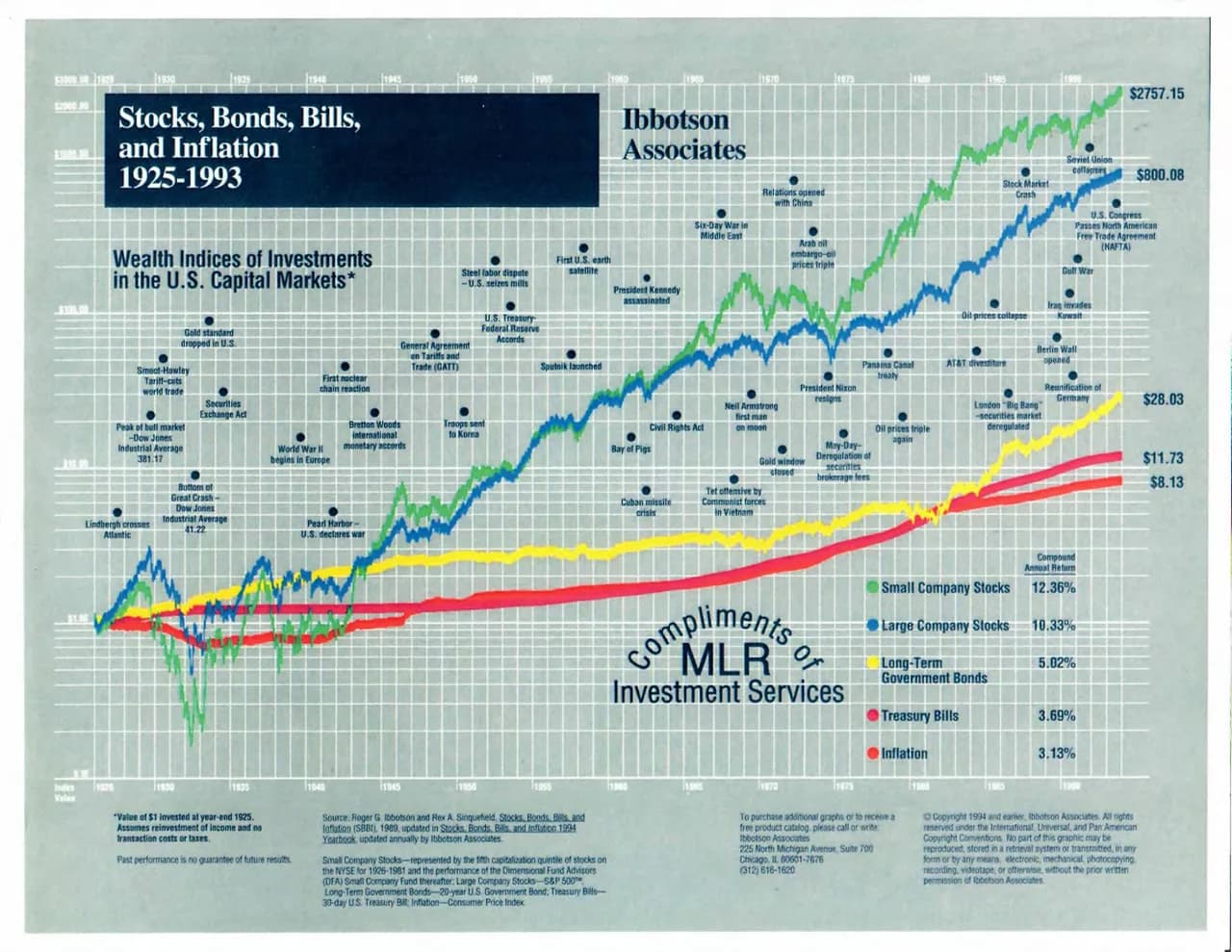
As reports came out of the Advisory Council, I felt more and more certain Ball would never convince Congress to let Social Security invest. Then one day, Eureka! I realized Social Security should be doing what the chart and I had been recommending to investors. Just invest in “the stock market” early and reinvest dividends. Recognizing my calling, I left the retirement industry in ’96 and started developing what is now the Supercharged Social Security Proposal.
Three decades later, it’s time to amend OASI with Supercharged Social Security. And time for the retirement industry and their political-contribution recipients to acknowledge that a plan like Supercharged Social Security could increase disposable income so much. Enriched Americans would be clamoring for Supercharged Social Security – AND more private retirement plans – not less.
The ask
Of course, anything political takes time. But recognizing the potential for a huge win-win-win-win for virtually ALL Americans, employers, politicians, and our economy should start a grass-roots retirement revolution. A Congressional study would show smart leaders that the Supercharged Social Security Secret Sauce, FICA phase-out, could help their constituents retire more securely, and even enhance their own retirement-industry campaign contributions. Our Proposal should help make that happen. Especially if YOU, your family, and friends ask your elected representatives for the Supercharged Social Security cure.
Guide to terminology
Guide to terminology
The short names I use throughout my Proposal, and what each one stands for.
- Supercharged Social Security
- Supercharged Social Security – pronounced “SSS”
- MTB
- Minimum Target Benefit
- COLA
- Cost Of Living Adjustment
- TMI
- Total Stock Market Index
- RCCA
- Supercharged Social Security Retirement-Credit Cutoff Age
- Supercharged Social Security PPT
- Supercharged Social Security Pension Payroll Tax
- VCCA
- Voluntary-contribution Cutoff Age
- SSA
- Social Security Administration
- startup
- Supercharged Social Security startup
- the founders
- Social Security’s founders
- Treasury
- U.S. Treasury
Back-test · opportunity cost
My numbers, run on public data you can check
My SBBI series starts in 1814. The public Shiller series, which this site’s calculator runs on, starts in 1871. Same road. Trust, but verify.
“It is better to be approximately right than precisely wrong.”
“Past performance may provide no guarantees, but long-term future stock market index returns will almost always fall between the best and worst returns of the past 200+ years. Average was always good, and the worst was never bad.”
The full record – including the SBBI and Andex charts I keep framed on my wall – is in the data room.
Two things my Proposal does NOT mean.
First: this is NOT privatization. Your pension is a share of one pooled Supercharged Social Security Trust Fund. Social Security would manage it. Not YOU. It’s that simple. Second: today’s Social Security is not about to vanish.
Every figure on this page is my own estimate unless it carries a gold source mark . My road figures brought up to 2025 are on Two Roads; the site’s own math is on the calculator.
How the numbers on this site work
This site draws one hard line, everywhere. Numbers with an outside, checkable source – trust-fund depletion dates, poverty thresholds, historical market returns, other pension funds’ track records – are stated as fact, each with a named source attached. Where they sit among my own figures, they carry a gold mark . My own projections and totals are always marked as mine. On the site’s other pages they sit in their own frame, with a link to the working behind them. They never appear in a headline written in the site’s own voice.
My own headline counterfactual totals – the kind of numbers that try to answer “what could this plan have been worth, all in, since 1935?” – appear only where the page is my own document, in my own words: this page, Two Roads and Legacy System Flaws. The one exception is my Ron Paul example on the home page: a single table, framed as mine, with this site’s own reproducible figure printed beside it.
Every dollar figure that appears in this site’s own voice – including the ones in the worked examples – traces to a reproducible calculation.